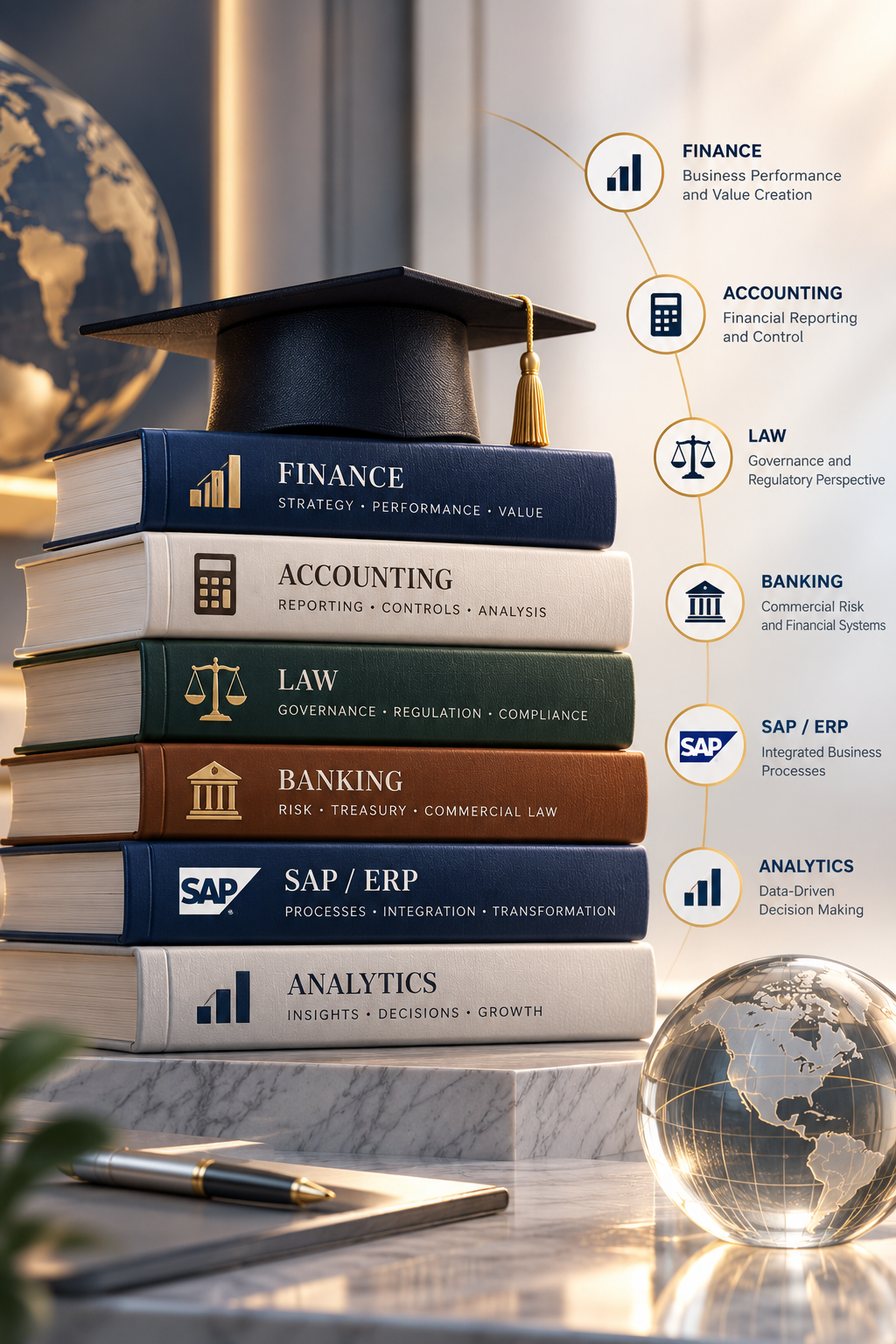
 My academic journey has been intentionally multidisciplinary—combining accounting and finance, professional accountancy, business law, banking, intellectual property, enterprise technology, SAP S/4HANA, and analytics.
Each stage has strengthened a different dimension of how I approach business: understanding the numbers, interpreting the regulatory environment, connecting end-to-end processes, leveraging enterprise technology, and transforming data into informed decisions.
My academic journey has been intentionally multidisciplinary—combining accounting and finance, professional accountancy, business law, banking, intellectual property, enterprise technology, SAP S/4HANA, and analytics.
Each stage has strengthened a different dimension of how I approach business: understanding the numbers, interpreting the regulatory environment, connecting end-to-end processes, leveraging enterprise technology, and transforming data into informed decisions.
ACADEMIC FOUNDATION • PROFESSIONAL DEVELOPMENT • CONTINUOUS LEARNING
Education That Built
My Business Perspective
Finance. Accounting. Law. ERP. Analytics. Leadership.
From Financial Fundamentals
to Enterprise Transformation.
15+ Years Experience




Connect with me


Building Business Leadership Through Continuous LearningWhere Finance Expertise Meets Enterprise Technology
My education reflects a career-long commitment to understanding business from multiple perspectives. I began with a foundation in Accounting & Finance, expanded that knowledge through professional Chartered Accountancy training, and developed complementary expertise in business law, banking law, and intellectual property rights. Then MBA focused on ERP (SAP S/4HANA) & Analytics, connecting finance expertise with enterprise systems, integrated business processes, analytics, and technology-enabled transformation. The result is a multidisciplinary perspective that allows me to engage with business challenges not only from the standpoint of finance, but also through the lenses of operations, governance, systems, data, risk, and enterprise value creation.
My education has not been a collection of credentials—it has been a progression from understanding financial transactions to understanding the entire enterprise.
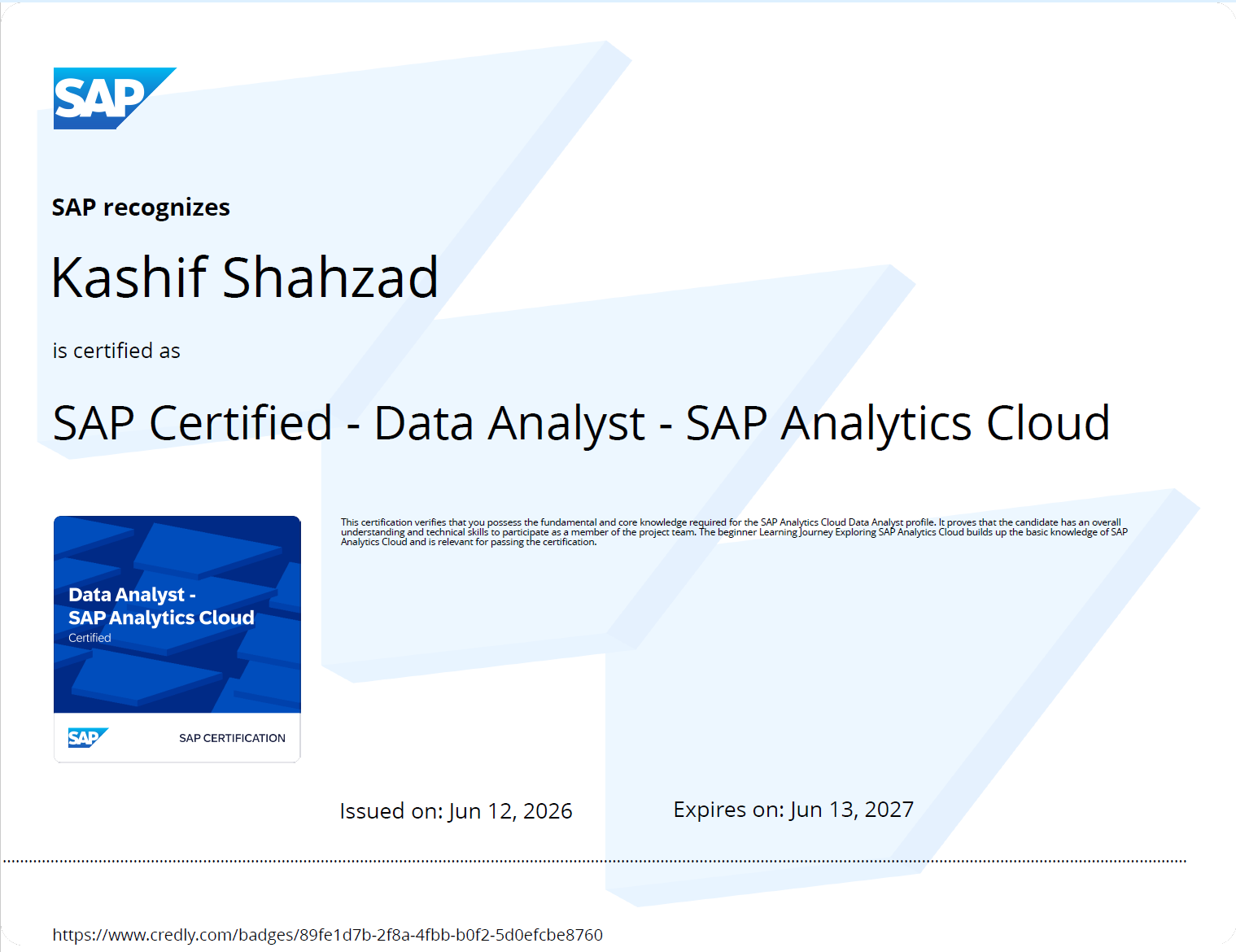
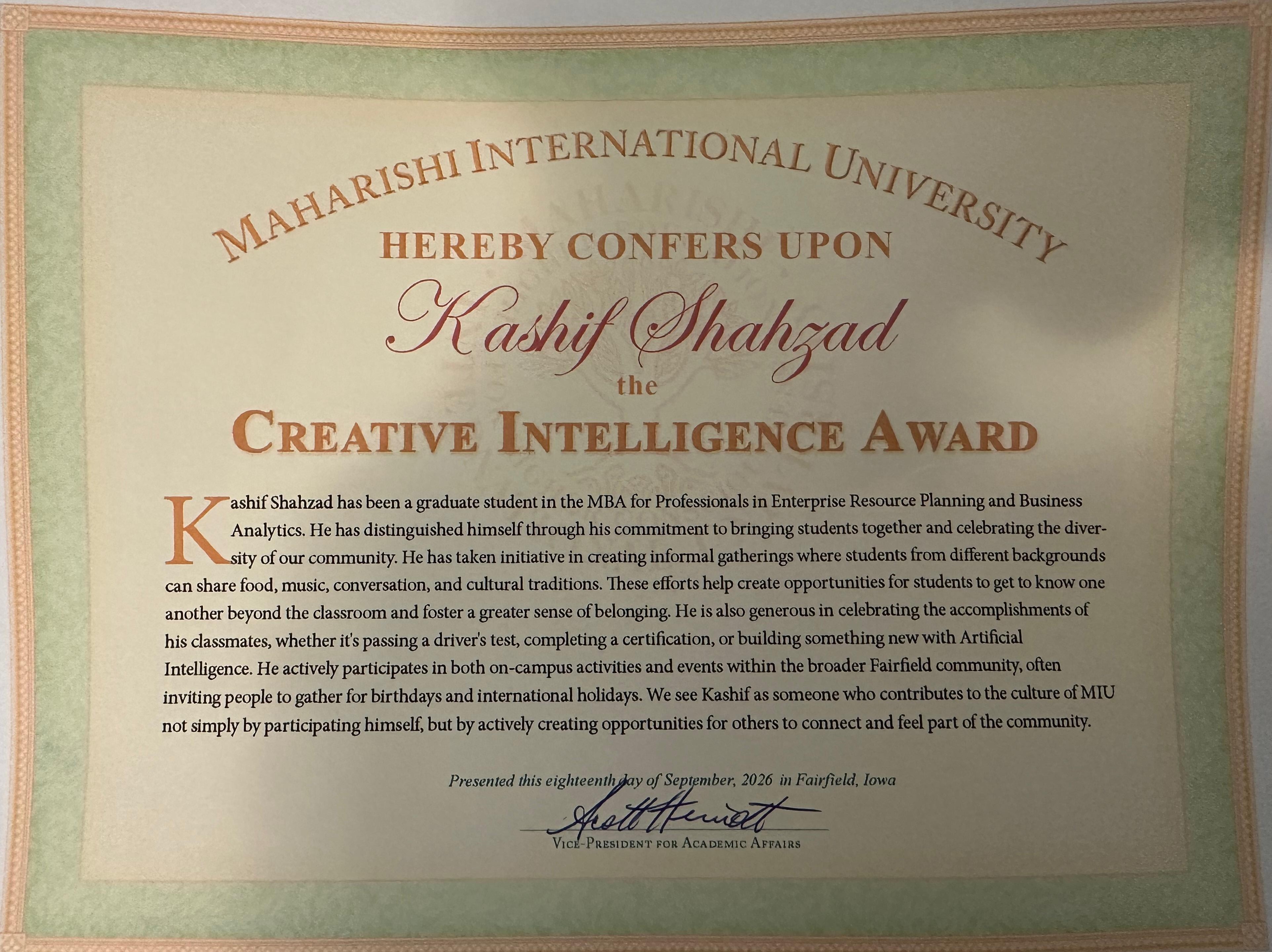
ERP (SAP S/4HANA) & Analytics Professionals MBA Maharishi International University, Fairfield, IA (In Progress, expected 10/2028)
My MBA represents the next evolution of my professional development: integrating extensive business and finance experience with modern enterprise technology. The program is strengthening my understanding of how organizations connect Finance, Controlling, Procurement, Sales, Inventory, Manufacturing, Operations, and Analytics through integrated enterprise platforms such as SAP S/4HANA. More importantly, it is developing my ability to look beyond individual transactions and understand the end-to-end business processes, data relationships, management information, and cross-functional dependencies that drive enterprise performance.
What This Adds to My Professional Capability.
- Builds deeper understanding of how business requirements, processes, master data, transactions, controls, reporting and analytics come together within modern ERP environments.
- Strengthens the connection between enterprise data, financial analysis, performance measurement and management decision-making.
- Expands my ability to collaborate across Finance, Procurement, Supply Chain, Sales, Operations, IT and executive management.
- Transforming my finance leadership foundation into enterprise-wide digital transformation capability.
Chartered Accountant (CA) – Intermediate Institute of Chartered Accountants of Pakistan (ICAP) (11/2008)
My Chartered Accountancy education established rigorous foundations in accounting, auditing, taxation, financial management, corporate and business disciplines. More than technical accounting knowledge, the CA pathway strengthened the analytical discipline required to understand how transactions affect financial statements, how controls protect organizational value, and how financial information supports accountability and business decisions. Combined with practical professional experience, this foundation developed my ability to approach financial issues with structure, accuracy, professional judgment and commercial awareness.
What This Adds to My Professional Capability.
- Built the accounting discipline.
- Analytical rigor and control mindset.
- Transforming my finance leadership foundation into enterprise-wide digital transformation capability.
Postgraduate Diploma in Banking Law (DBL) University of the Punjab Law College ) (1/2007)
Connecting Finance with Banking, Regulation & Commercial Risk Banking law expanded my finance perspective beyond accounting records into the legal and regulatory environment surrounding financial transactions. The program strengthened my understanding of the relationship among financial institutions, businesses, contractual obligations, regulatory frameworks, lending and commercial transactions. For a finance professional, this perspective is valuable because major business decisions frequently sit at the intersection of finance, treasury, contracts, risk and compliance.
What This Adds to My Professional Capability.
- Strengthened my ability to evaluate financial decisions.
- Through both commercial and regulatory perspectives.
Postgraduate Diploma in Intellectual Property Law (DIPL) University of the Punjab Law College ) (2/2005)
Understanding the Value Behind Intangible Assets Modern enterprise value extends far beyond physical assets. Brands, trademarks, intellectual property, proprietary processes and innovation can represent significant sources of competitive advantage. My postgraduate study of Intellectual Property Rights broadened my understanding of how organizations protect and manage intangible assets and how legal frameworks interact with commercial strategy. This perspective is increasingly relevant in technology-driven businesses where innovation, software, brands, digital platforms and proprietary knowledge contribute significantly to enterprise value.
What This Adds to My Professional Capability.
- Expanded my understanding of enterprise value from financial assets
- to intellectual capital and innovation.
Bachelor of Laws (LL.B.) University of the Punjab Law College (5/2004)
Bringing Legal Perspective to Business Decision-Making My legal education added another dimension to my finance background by strengthening my understanding of how organizations operate within contractual, statutory and regulatory frameworks. It developed structured reasoning, interpretation, evidence-based analysis and the ability to evaluate business situations from multiple perspectives. For leadership roles spanning Finance, ERP and enterprise transformation, this background helps me appreciate an important principle: a business process must not only be efficient and financially sound—it must also operate within appropriate governance, contractual and regulatory boundaries..
What This Adds to My Professional Capability.
- Developed the structured reasoning and governance perspective
- Needed to evaluate business decisions beyond financial outcomes alone.
Bachelor of Commerce (B.Com.) Hailey College of Commerce, University of the Punjab, Lahore (11/1996)
Where the Finance Journey Began My undergraduate education established the foundation for my professional career by developing core knowledge in accounting, finance, economics, business and financial analysis. It taught me to understand organizations through their numbers: how transactions become financial statements, how costs influence profitability, how capital is deployed, and how financial information supports management decisions. That foundation later enabled me to move beyond traditional accounting into FP&A, costing, working capital, financial management, ERP systems, analytics and finance transformation.
What This Adds to My Professional Capability.
- Created the financial foundation upon which my leadership
- ystems and transformation capabilities have been built.
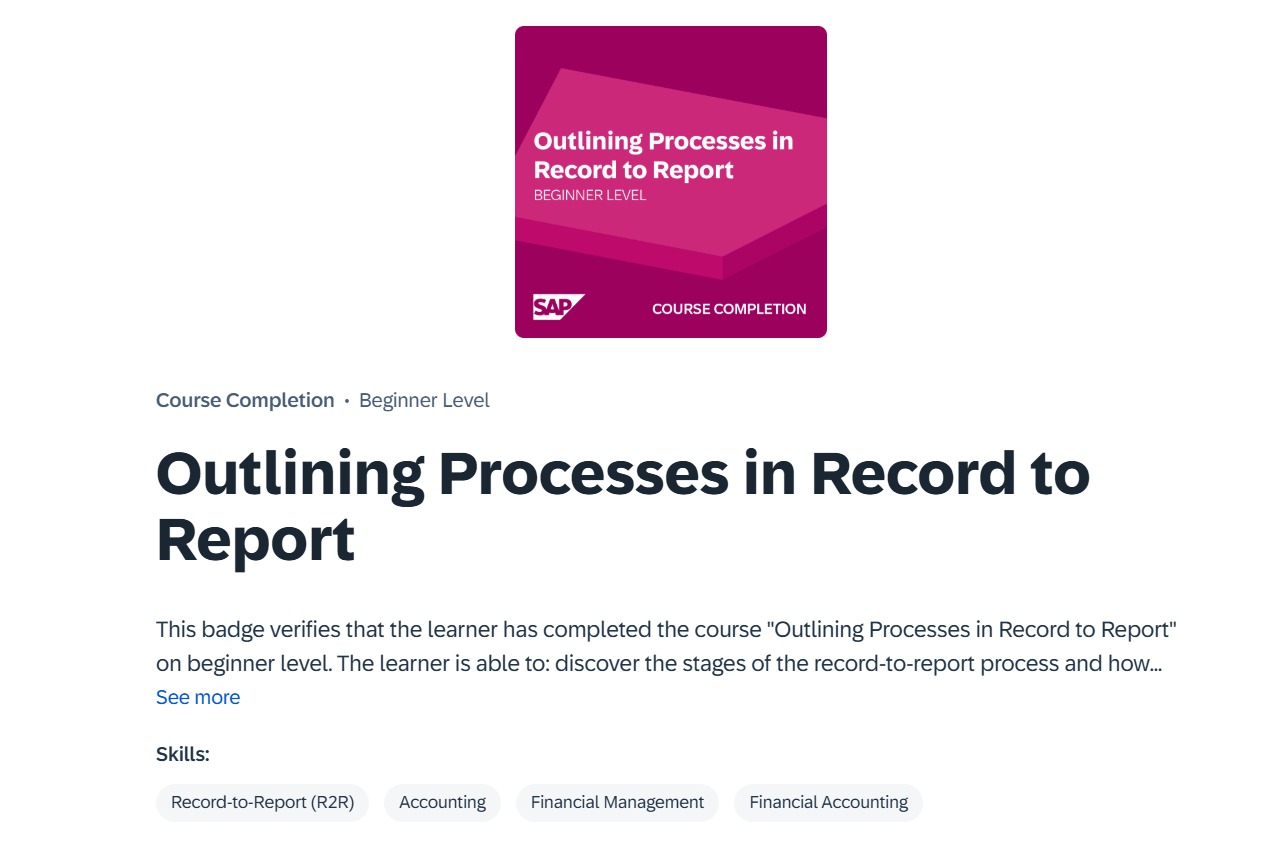
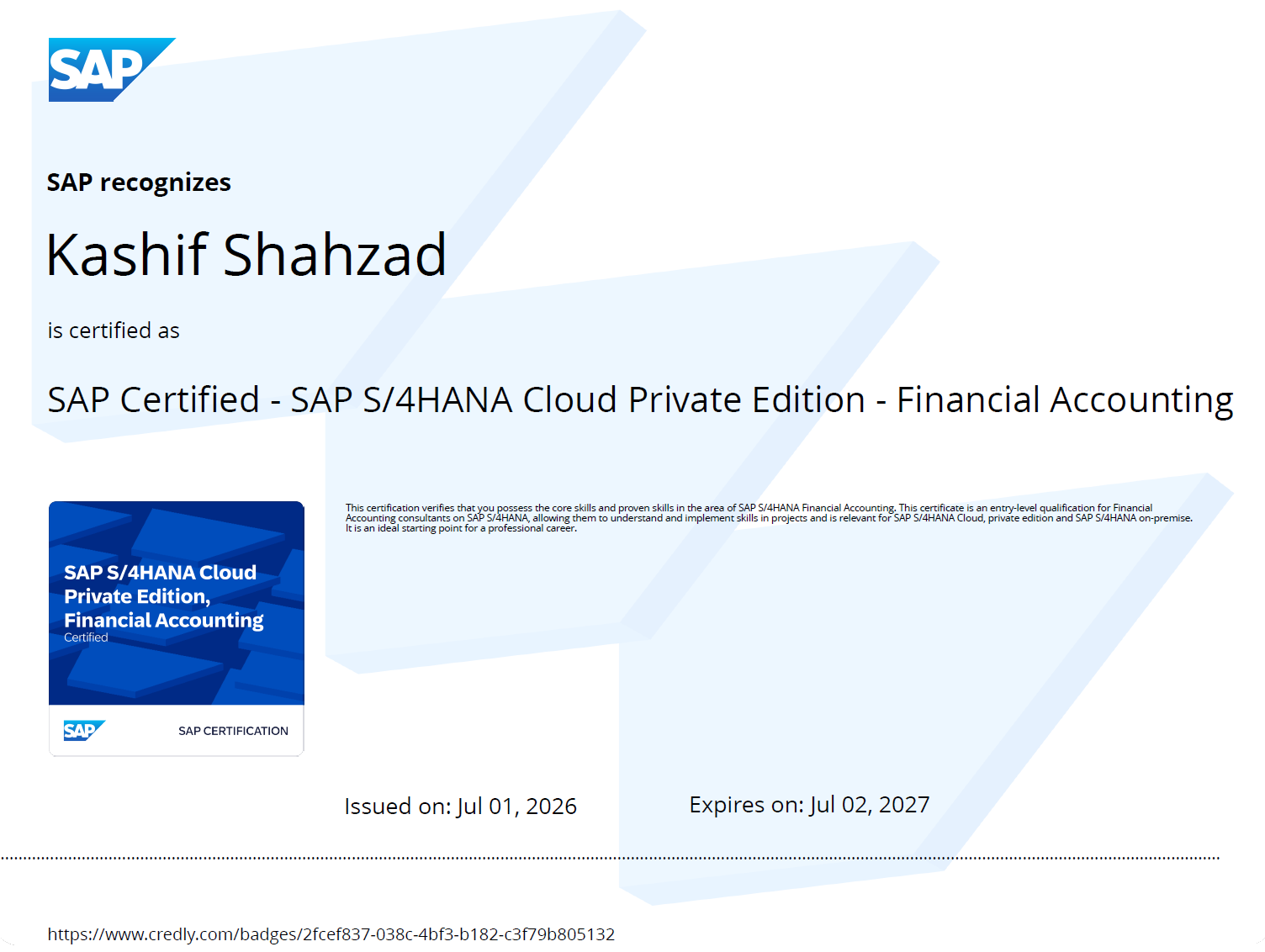
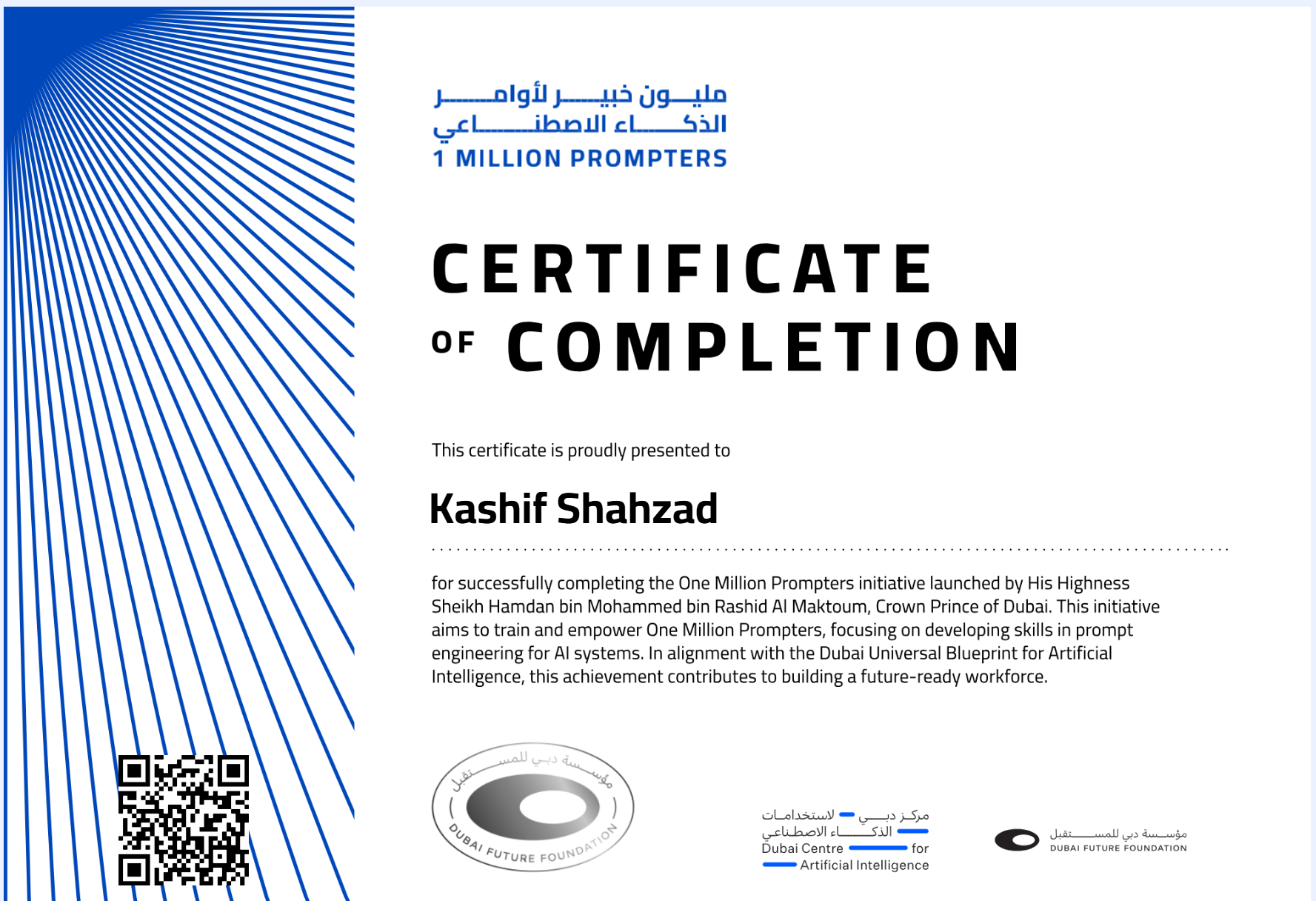
Finance Foundation. Enterprise Perspective. Technology-Enabled Future.
I bring together multidisciplinary education, extensive professional experience, finance-domain expertise and a growing specialization in SAP S/4HANA and analytics—creating a foundation for leadership in Finance, ERP and enterprise transformation.